About Roots of Reason

Where curiosity, confidence, and rigor meet

Neuroscience-informed practice Confidence-first tutoring East San Jose & online

Roots

Reason

Root Causes

What's actually in the way

A student struggling with fractions may be missing something from years earlier: a concept about parts and wholes that never fully landed. A student who "won't focus" may be overwhelmed by how much feels uncertain. A student who shuts down during writing may be carrying a belief about themselves that has nothing to do with writing at all.

Root causes sit underneath. They're the foundational gaps, the quiet beliefs about ability, the experiences that shaped how a student relates to learning. They don't appear on report cards, but they shape everything that does.

The work starts here. Identify what's actually in the way. Address that. What's built on top becomes more stable.

Thinking Clearly

Skills that carry forward

Reading and understanding what a passage actually says. Writing that organizes thought and communicates it. Math that makes sense, not memorized steps, but knowing why they work. Evaluating information, building arguments, solving problems without instructions.

These are reasoning skills. They matter for school, but they matter even more after: understanding contracts, making decisions, figuring out what's true.

Reasoning is how a person moves through complexity.

Shared Ground

How all people naturally learn

Every child is born reaching for understanding. Curiosity isn't something that needs to be taught. It's already there. The drive to ask why, to figure things out, to make sense of things that don't yet make sense. It's built into how humans work.

This is shared ground. The same capacity exists in every student. The methods that work aren't tricks. They align with how people naturally learn: through connection, relevance, and questions they actually care about.

They work because they meet something already present.

Purpose

Having a reason to

There's a difference between being able to learn and wanting to. Purpose is the part that wants to. It's what makes effort feel worth it, not because someone assigned it, but because it matters.

When a student finds something they genuinely care about, the orientation shifts. They stop going through motions. They start pursuing. That kind of motivation can't be given, but conditions can be created where it emerges. By taking curiosity seriously and connecting it to what the student is building.

This is the deeper meaning of reason: not just the capacity to think, but having a reason to.

The name holds both. We use what's shared in our roots (the universal drive to understand) to address root causes, the real obstacles underneath. We build reasoning so students can think clearly. And we do it in a way that helps them find their own reason. Something worth pursuing.

Roots of Reason means something like "the cause of one's cause."

The goal isn't a destination. It's a departure. When this works, students start learning once they leave. Because they have a why and they know how to follow it.

About the Founder
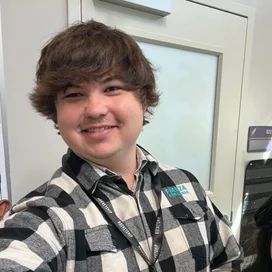
Keith Reed, founder of Roots of Reason
  • Degree in Neuroscience
  • 6 years in education
  • CA state-certified educator
  • Based in East San Jose

Roots of Reason was founded by Keith Reed, a California-credentialed educator with a background in neuroscience and over six years of experience supporting students in classroom, small-group, and intervention settings.

Keith taught 4th and 5th grade math and science for four years at a public charter elementary school in California, working primarily with high-ELL and Title I student populations. His work focused on strengthening academic foundations while supporting executive functioning, engagement, and persistence for students who struggled within traditional instructional models. Prior to this role, he served with City Year and worked as a private tutor across grade levels.

Across these settings, Keith observed that while some approaches produced short-term improvements, longer-lasting progress emerged when learning was paired with relevance, structure, and student agency. These conditions supported deeper engagement and more durable academic growth over time.

Roots of Reason was developed to provide accessible, high-quality academic support to families—meeting students where they are and helping them build confidence, skills, and independence. Services are also designed to support schools by complementing existing curricula and reinforcing core skills without disrupting school structures.

How It Works

What the first sessions actually look like

No worksheets on day one. No pop quizzes. The early sessions are about understanding your student — not just academically, but how they think, what drives them, and where the real obstacles are. Everything that follows is built on that picture.

We start by listening

Before any academic work, we learn who your student is — and how they see themselves.

The first sessions are low-pressure conversations. Sharing interests, going on tangents, responding to slides or objects that take the pressure off direct interaction. But underneath the conversation, something specific is happening. We’re observing how your student actually functions — their skills, their independence, their comfort with other people — and comparing that to how they see themselves. A student who’s capable but doesn’t believe it looks very different from one who genuinely needs skill-building. That distinction changes everything about what comes next.

What we’re actually assessing

We call this passive diagnostics — learning about a student through natural interaction rather than formal testing. Research in Self-Determination Theory identifies three foundations that shape whether a student is motivated to learn: competency, independence, and connectedness. We observe all three in real time.

But here’s what most approaches miss: we’re also listening for how the student perceives those same three things — their own sense of ability, autonomy, and belonging. Those two pictures often don’t match. A student might be highly capable but convinced they’re not. Or fiercely independent in some areas while completely dependent in others. Or socially connected at home but isolated at school. The gap between what’s real and what they believe is where the most important work begins.

We’re also searching for curiosity — what lights up when nobody’s watching, what questions they ask when they don’t think it counts. Parents can usually feel when something is off with their child’s motivation, even when they can’t name exactly what. Curiosity is the thread that connects to it.

We find the thread

Every student has something. We use it to understand how they think.

Through these conversations, interests surface — sometimes obvious, sometimes buried under years of not being asked. A favorite game, a question about how something works, a passing comment about something they saw. We take those seriously. Not as decoration for lessons, but as real diagnostic information. What a student talks about voluntarily reveals how they organize ideas, how much detail they can hold, and what kind of thinking comes naturally to them.

Why interests matter this much

When a student talks about something they care about, you learn things that standardized tests can’t measure. A student whose favorite game features mythological creatures ends up exploring the folklore behind them — which becomes a writing anchor, which reveals language processing gaps that were invisible in standard assignments. Another student’s interest in building things leads to a project that surfaces how they handle variables and sequential logic — foundational math concepts, encountered through something they chose.

We call this guided curiosity mapping — using a student’s genuine interests as pathways into the skills they need. The interest isn’t enrichment bolted onto academics. It is the pathway to the academic work. And it gives us a way to connect what your student needs to learn with something they actually want to think about.

We build from the inside out

Low-stakes assignments, honest parent communication, no guesswork.

Early assignments are intentionally small. A mind map. A list of what the teacher mentioned this week. Something to bring back next session. There are no consequences for forgetting — and that’s the point. Whether your student follows through, half-finishes, or loses the paper entirely, each outcome tells us something specific about where their motivation and executive function stand right now. We ask parents to hold back on reminding during this phase — not because the work doesn’t matter, but because the information is clearer when the drive is coming from the student alone.

What parents receive

By removing external pressure, we can see what’s driving your student from the inside. If they follow through when nobody’s checking, that tells us the connection built in sessions is transferring. If they don’t, that’s equally useful — and we adjust. This is how we distinguish between a student who needs accountability structures and one who needs something entirely different.

Parents receive updates that explain the reasoning behind each session — not just “we worked on fractions.” You’ll know what we observed, what we tried, why we tried it, and what it means for next steps. No mystery curriculum, no vague reassurances.

As sessions continue, the balance shifts toward direct academic work — but always anchored in what we’ve learned about how your student thinks, what motivates them, and where the real gaps are.

Questions Parents Ask

Is Roots of Reason a good fit?

A few quick answers to help you decide.

Do you follow school curriculum?

Yes. We work directly with current assignments and standards so support shows up in grades and confidence—not just on separate worksheets.

Is this only for "advanced" students?

No. Many students we work with are behind in at least one area. The common thread is that they're willing to show up honestly and try something different.

How do I get started?

Reach out using the contact form with a short note about your student. We'll set up a free consult to see whether we're a good fit and what kind of schedule makes sense.

What ages or grades do you work with?

Primarily grades 3–10, but it depends more on fit than age. If your student is willing to engage and you think this approach might help, reach out and we'll talk.

Do you offer online sessions?

Yes. Both in-person (East San Jose area) and online options are available.

Ready to talk? Get in touch here and we'll follow up with simple next steps.

Ready to learn more?

Schedule a free consultation to discuss how we can support your student's learning journey.

Schedule A Free Consultation

No commitment required.